In our previous post, we discussed the “bear market,” which is characterized by a market downturn. Today, we will look at the opposite phenomenon: the “bull market.” A bull market describes a positive state of the market and a period of growth.
What Is a Bull Market?
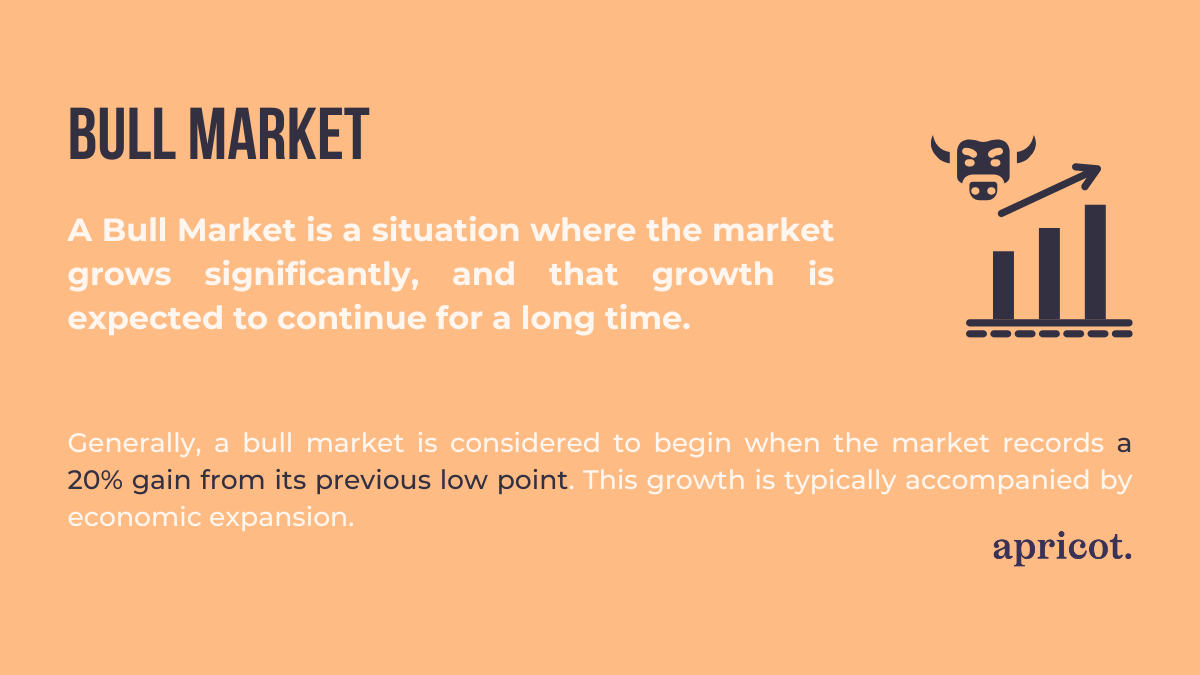
A Bull Market is a situation where the market grows significantly, and that growth is expected to continue for a long time. This period is characterized by investor optimism and increased confidence in the market.
Generally, a bull market is considered to begin when the market records a 20% gain from its previous low point. This growth is typically accompanied by economic expansion.
Investors begin to buy securities, and confidence in the economy rises. A bull market is typically accompanied by high corporate profits, low unemployment, and increased consumer spending. Together, these factors create a positive economic backdrop.
Why “Bull”?
There are different theories regarding the origin of the terms “bear market” and “bull market.” The most common explanation is linked to how these animals attack:
- The bear attacks by swiping its paw downward (from top to bottom), which symbolizes a drop in prices.
- A bull market is characterized by rising prices: the bull attacks by lifting its horns upward (from bottom to top).
Apricot Capital is regulated by the Central Bank of Armenia.
The examples in this text are for illustrative purposes only. This does not constitute investment advice or a recommendation to buy or sell any specific investment instrument. The past performance mentioned in this text is not indicative of future results.